Winery vs Garden Wedding Venues in Australia
Compare pricing, inclusions and weather backup to choose between these distinct venue types.
Choosing between winery and garden wedding venues in Australia means comparing more than the view. The stronger choice is the one whose setting, inclusions, total cost and weather plan fit the wedding you want. Wedbuild can help organise that comparison and the budget behind it, but the decision starts with understanding what each venue actually delivers.
Why couples comparing winery and garden venues keep hitting the same wall
Couples face too many variables with no clear way to weigh them. Winery and garden venues can look remarkably similar in photographs while offering quite different bookings. A shortlist built around scenery alone leaves the harder decisions unresolved.
One price may cover much of the day, while another buys access to the grounds. Neither tells you enough without its inclusions. Couples can see which choice fits once they compare how each place feels, how the day will run, the full cost and how the season could affect it.
What each venue type actually delivers — atmosphere, logistics, and what's bundled in
Both venue types can bring the ceremony, reception and photographs into one setting. That removes guest transport between ceremony and reception sites and gives photographers a cohesive location to work with. The distinction is what comes with that setting. Even with everything on one property, some services may need to be booked on their own.
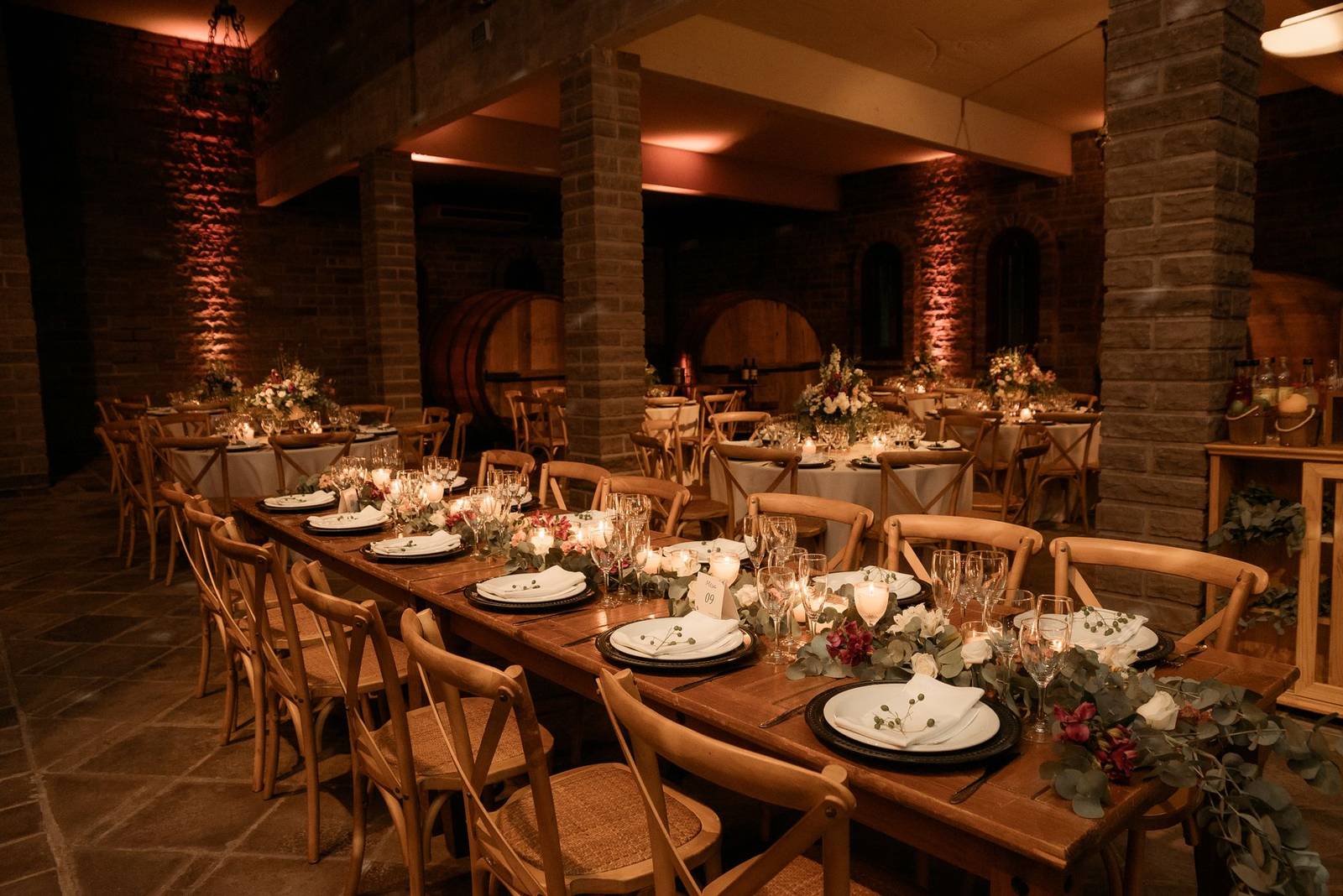
At a winery, rows of vines, stone buildings and estate architecture provide much of the atmosphere. Cellar doors and wine tastings can give the celebration a destination feel beyond the ceremony itself. On-site accommodation is also common at winery estates, making an extended stay possible. Stones of the Yarra Valley combines a barn and chapel with vineyards, manicured lawns and accommodation.
Garden venues get their character from trees and plants that have grown there for years and, often, heritage buildings. Gardens House brings an 1854 building into Melbourne’s Royal Botanic Gardens, while other estates offer lawns and gardens around historic architecture. These venues are more likely to offer dry hire or partial hire, leaving couples to arrange some services themselves. That gives external caterers and stylists more room to shape the day. Both settings can reduce the need for extensive floristry, gardens through existing plantings and wineries through vineyard scenery.
How the true cost of each type is calculated — and where couples get caught out
The first commonly includes food, drinks, glassware, linen and coordination. The second may cover none of those things. Once the missing services are added, what looked cheaper can cost the same or more. Total venue cost is the useful comparison.
Cleveland Estate in the Macedon Ranges bundles the main parts of the day into its per-head pricing, with places for the ceremony in vineyard, terrace, lakeside and garden settings. Brown Brothers Winery in Milawa also has per-head packages for weddings with mid-sized guest lists. Even so, a package is not a promise that nothing else will be charged. Request an itemised quote covering catering, beverages, linen, glassware, staffing and coordination. Then ask about site exclusivity fees, minimum food-and-beverage spends, separate ceremony setup charges and external hires such as chairs, a celebrant’s PA system or a marquee.
Garden pricing needs the same scrutiny, rather than an assumption that every garden is dry hire. Gardens House charges per head, so its pricing is closer to a winery package. Rippon Lea Estate in Elsternwick accommodates larger guest lists and prices on enquiry, so a full quote is needed to establish the total cost. For any hire-led booking, ask which furniture, catering infrastructure, staff and weather backup must be added.
Venue and catering take the largest single share of the average Australian wedding budget, so omissions here have consequences elsewhere. Once costs are itemised, a shared checklist or planning platform makes the shortlist easier to revisit as quotes arrive. With vendor comparison and budget tracking in one workflow, Wedbuild offers a structured way to keep those differences visible. Its relevant planning tools require paid plans, which should also be understood before choosing that approach.
Seasonal timing, weather risk, and how each venue type handles both
The season affects both the look of the property and the booking itself. For wineries in Victoria and South Australia, autumn from March through May is the most sought-after window. Turning foliage, harvest activity and warm light make it appealing, with sought-after Yarra Valley and Barossa dates commonly booked 12 to 18 months ahead. Spring from September through November brings budding vines and green landscapes, with similarly strong demand.
Many winery estates have barns, cellars or stone rooms that serve as indoor or covered backups. These spaces can retain the character that drew couples to the property. The important distinction is between having a backup and knowing exactly how it works. Ask which space would be used and whether moving into it adds a charge.
For gardens, spring is the main flowering season, while autumn suits heritage estates with deciduous trees. A garden without a permanent roof needs a different contingency, often a marquee with its own hire and coordination costs. Heritage restrictions may limit temporary structures, so permission cannot be assumed. Gardens House also has year-round conditions, including no confetti or petals, no onsite parking and heritage-use requirements. These conditions need to be accounted for in planning.
Where Australian winery and garden venues concentrate — a regional picture
The main winery concentrations include Victoria’s Yarra Valley and Mornington Peninsula, South Australia’s Barossa Valley and McLaren Vale, and Western Australia’s Margaret River. Each has its own landscape and local wines that give the wedding a different character. Garden and heritage features also appear within these regions, so the categories often overlap on the ground.
In the Yarra Valley, Stones of the Yarra Valley has a barn-and-chapel setting, while Zonzo Estate brings Italian-style character and a terrace overlooking vines. Zonzo accommodates up to 140 guests long-table or 80 at The Stables. TarraWarra Estate has modern buildings with views across the valley. Elsewhere in Victoria, Melbourne’s Gardens House and Rippon Lea Estate have heritage gardens for couples who want a city setting.
In South Australia, Mitolo Wines in McLaren Vale has views of the hills and space for outdoor ceremonies near vines and large trees. Saltram Wine Estate in Angaston combines rose gardens and green lawns with a variety of function rooms. The state’s garden-and-winery wedding style tends towards classic elegance and modern minimalism, including long tables and refined countryside interiors.
In Western Australia, Fraser Gallop Estate sits in Margaret River’s Wilyabrup subregion. Its Palladian mansion, vineyard views, lakeside lawns and formal parterre gardens show how closely winery and garden characteristics can meet. Tasmania’s Tamar Valley offers another version at Waterton Hall, with heritage gardens, a 1850s Stone Barn and a boathouse on the water. The property is available for exclusive wedding use.
When a winery is the stronger choice — and for which couples
Choose a winery when you want an established experience to personalise rather than a largely separate set of services to assemble. The vineyard, buildings, food and wine already give the day a clear identity. This is a strong fit for couples who want the setting to carry much of the décor and prefer fewer supplier relationships. A bundled contract can cover most of the day without making every element a separate booking.
A winery also suits couples seeking a destination feel within an hour or two of a capital city. If extending the celebration matters, accommodation at estates such as Lindenderry at Red Hill or Stones of the Yarra Valley can keep the core group together overnight. Cellar doors and private tasting rooms can give smaller weddings a more intimate feel. La Cantina at Olivigna is one example of a space suited to that approach.
The condition is that you like the estate’s own offering. In-house catering is convenient when it matches the food experience you want. It becomes a constraint when a particular external chef or caterer is non-negotiable. If you need that freedom, check winery exclusivity arrangements and minimum spends to establish whether you can use your chosen caterer and what it will cost before the venue reaches the final shortlist.
When a garden venue is the stronger choice — and for which couples
Choose a garden or heritage estate when marrying at that particular place justifies arranging more services yourself. Its history, plantings or architecture may be the reason to marry there. Gardens House has the charm of a heritage building set in botanical grounds that have grown around it over time. That kind of setting suits couples who want the place itself to shape the celebration.
A dry-hire or partial-hire garden is also a strong fit when control over catering matters. The freedom to select a chef, cuisine or dietary approach can justify coordinating more suppliers. For guests based in inner Melbourne, a garden venue in South Yarra or Elsternwick may also keep travel simpler than a regional winery. Spring suits couples who want a wedding when the garden flowers are at their best.
For couples drawn to buildings more than vines, Lavandula Swiss Italian Farm has places to marry from a Stone Barn to lavender fields. Amarti brings the character of the heritage-listed Cowwarr Butter Factory. These choices take careful coordination, but that need not make planning harder. Before signing, itemise furniture, catering infrastructure, AV, wet-weather structures and coordination so that the freedom you want has a clear cost.
The questions to ask at every venue inspection — for both types
An inspection should leave you with answers about how the day will run. Ask each venue the same main questions so you can compare their answers. Request a complete itemised account of what is included and what costs extra. Have the venue identify ceremony chairs, the celebrant’s PA, linen, glassware, staff, coordination and wet-weather backup separately.
Ask what happens in wet weather and whether activating the backup costs more. Establish whether other events can run on the property that day. Confirm when access begins and ends for both the couple and suppliers. Ask how noise limits affect band or DJ times, and establish the guest transport and parking arrangements.
At a winery, ask whether catering must be in-house and whether a minimum food-and-beverage spend applies. Confirm whether site exclusivity carries a fee beyond the per-head price. Find out which accommodation is available and whether it can be booked within the wedding package. Ask whether rules during vintage or harvest could affect the date you have in mind.
At a garden or heritage venue, ask about restrictions on confetti, temporary structures, noise and access times. Confirm whether a marquee is permitted, who arranges it and what it costs. Find out whether outside caterers are allowed, whether they must come from a preferred-supplier list and which kitchen facilities they can use. Finally, ask when suppliers can bring their equipment in and take it away.
How to manage the planning load once the venue is chosen — and where WedBuild fits in
Once the venue is booked, the rest of the plan becomes concrete. The number of guests shapes catering, what is spent on the venue sets how much is left for other suppliers, and details of how the site works help shape invitations and RSVPs. Dietary information then needs to reach the right kitchen and connect with the seating plan. A winery’s in-house team and a garden’s external caterer need the same accurate guest information, even though the handoff differs.
Separate spreadsheets and inboxes can hold those details, but they require manual reconciliation. A connected platform suits couples who want the guest information and planning tools to work together. WedBuild connects the wedding website, RSVPs, seating chart and budget planner. Each guest’s dietary answers from RSVPs go straight into the seating chart, while its budget planner is built around how Australian venues charge.
Its guest list also tracks RSVP and accommodation status, which is useful for winery stays. For garden bookings with several external suppliers, the budget planner tracks actual spending against category allocations in real time. Vendor comparison gives couples a structured way to evaluate photographer, caterer and florist quotes. The platform is free to start, but the budget planner, seating chart and vendor comparison require paid plans, with one-time payments.
The venue decision therefore sets more than the scene. It defines what is already handled and what still needs arranging. Choose the trade-off that fits, then build the planning process around it.