Marrying in Australia Means Your Wedding Website Should Know What a Wattle Arch Is
A good Australian wedding tool knows the law, seasons and flora.
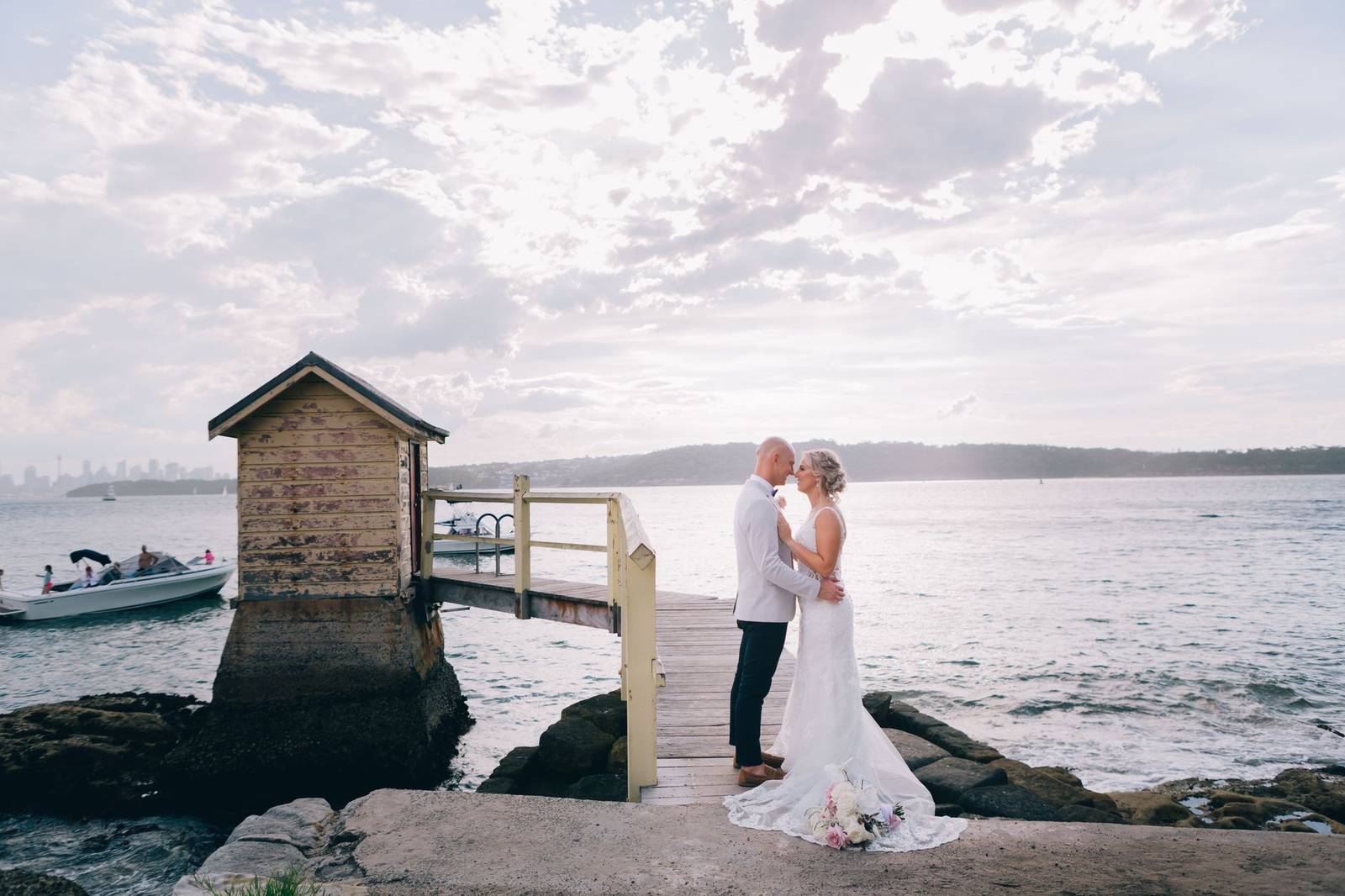
A wedding website builder purpose-built for Australia needs more than AUD pricing. It needs Australian vendors, local legal deadlines, seasonal guidance and guest information that flows into the seating plan and catering list. A tool that understands the wedding being planned, from a wattle arch to the Notice of Intended Marriage, saves the couple from correcting its assumptions.
Why Australian couples keep hitting walls with wedding planning tools built elsewhere
Almost every roundup of wedding planning tools is American, so Australian couples often begin with recommendations built around another country’s needs. Those assumptions go well beyond the currency symbol. They shape the budget defaults, the order of checklist tasks and the legal reminders that appear before the ceremony. A couple can change a dollar amount without knowing that the calendar behind it also needs correcting.
A checklist tells couples what needs attention and, by omission, what apparently does not. If its underlying rules belong to a different legal system or season, following it carefully can still leave something important undone. Local knowledge in a regional settings menu therefore has to shape the planning logic.
The legal requirement a US-built checklist will never flag: the NOIM
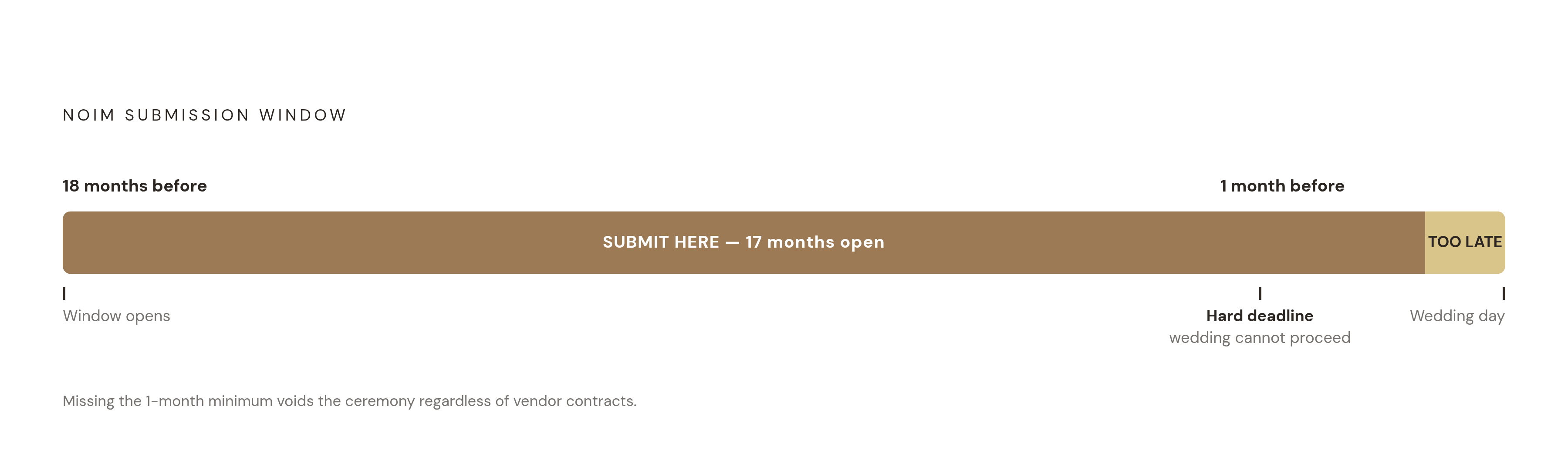
Australia’s Notice of Intended Marriage, or NOIM, must reach the celebrant at least one calendar month before the ceremony. The submission window extends to eighteen months before the wedding. Both boundaries belong in an Australian planning checklist, but the minimum deadline is the immediate constraint on the booked date. Couples still have to meet that requirement even if they have already paid vendors.
The couple must initiate the process themselves. The venue is not responsible for submitting the form, and the checklist should not assume that the celebrant will chase it unprompted. A useful reminder needs to identify the action, the recipient and the deadline. A vague task such as sorting out the paperwork does not do the same job.
A checklist structured around US marriage-licence requirements follows a different process and timetable. It cannot be treated as an Australian legal checklist simply because the wedding date is entered correctly. A built-in general-purpose AI assistant should not take the place of a clear NOIM milestone either. The legal calendar is only the first mismatch. The seasonal calendar changes the planning decisions that follow it.
How Australia's reversed seasons break every US-built checklist and budget
The peak wedding season in Australia runs September through April, and vendors are especially in demand in spring from September–November and autumn from March–April. Advice from the northern hemisphere follows a different calendar. A prompt that treats summer as the obvious peak can obscure the Australian spring and autumn dates when competition for vendors tightens. That changes when a couple needs to act.
Summer and winter off-peak dates can open availability and offer lower pricing. That gives couples a practical budget lever. However, the lever only helps if the tool explains the local pattern rather than importing a seasonal label from elsewhere. Choosing a date and estimating its cost are connected decisions.
Florist planning makes the mismatch especially clear. Blooms plentiful in an Australian October may be unavailable or expensive in an Australian December. An instruction to book the florist eight months ahead does not tell couples whether the flowers suit their chosen date. For a March wedding, the useful guidance joins the booking timetable to Australian availability, rather than treating elapsed months as the whole answer.
What knowing the local flora actually means inside a planning tool
A wattle arch, a banksia centrepiece and a ceremony framed by river gums describe a recognisable Australian wedding. A couple using those terms is telling the tool what kind of florist, setting and arrangement they need. Translating the request into the nearest familiar overseas style loses information before the search has properly begun.
Wattle, banksia, kangaroo paw, protea and eucalyptus belong to the floral vocabulary these couples use. Their seasonal availability needs to inform the brief. So does the florist’s experience with the requested materials. A vendor search that treats every florist as interchangeable cannot distinguish someone suited to a native-floral brief from someone whose work takes another direction.
For a bush ceremony, couples need to discuss heat management, shade structures, dust, ground conditions and fire-risk periods with the venue. A tool that recognises the words but cannot connect them to those questions has understood only part of the request. That gap follows the couple straight into finding and comparing vendors.
Why vendor categories and vendor comparison tools need to be built for Australia
To compare vendors, couples need to know what the work costs in Australia and what that price covers. Without that, a fair local quote can look surprisingly cheap or expensive when set against the wrong price. Venue hire is the largest single budget line nationally, with meaningful variation by state. A US average gives couples in Queensland, South Australia or Tasmania the wrong anchor for discussing what a venue should cost.
Floral quotes need the same local grounding. Pricing a native arrangement against US floral norms does not establish whether the Australian quote is reasonable. The comparison needs to reflect the requested work. Otherwise, the apparent precision of a budget calculator can disguise a poor comparison.
Directory position also needs to be read carefully. Advertising spend can determine prominence rather than quality, while capable vendors may have a free listing on page four or avoid directories entirely. A top result still needs to be assessed for fit, particularly when the brief calls for a specialist.
Corkage, cake-cutting and gratuities can add costs beyond the headline figure. A comparison that leaves those categories out understates what the couple may actually pay.
What an Australian wedding website actually needs to tell guests
Once the vendors and venue are chosen, the website has a different job. It must make the wedding understandable to the people attending. For a rural or regional Australian venue, that means a full address, including suburb and postcode, and a map pin. Standard navigation can struggle with these addresses, particularly when the destination is well away from the nearest sealed road.
Driving times from the nearest airport help interstate guests work out how long the journey will take, and places to stay and negotiated booking codes make it easier to book the stay. If transport is provided, coach pick-up points need to be clear. Guests should not have to reconstruct the route themselves.
Times need an explicit time zone as well. A guest in Perth reading about a Sydney wedding should not have to guess which clock the invitation follows. Outdoor conditions deserve equally plain language. At an exposed vineyard or bush property in January, heat, shade and dress-code notes tell guests what they are walking into. This helps keep guests safe as well as telling them how to dress for the photographs.
The response path should be just as clear. Most RSVPs are completed on phones, so mobile-responsive design is a basic requirement. One obvious RSVP button above the fold reduces the clicks between opening the site and replying. Yet a smooth reply form only collects the information.
How dietary requirements collected in RSVPs must flow through to the seating chart and the kitchen
Dietary information needs to belong to each guest. Partners in the same household may have different requirements. A shared free-text field leaves the kitchen without a reliable link between a person and a need. A specific question can prompt an actionable answer, such as “Any allergies or dietary needs we should know about? (e.g. gluten free, vegetarian, nut allergy)”.
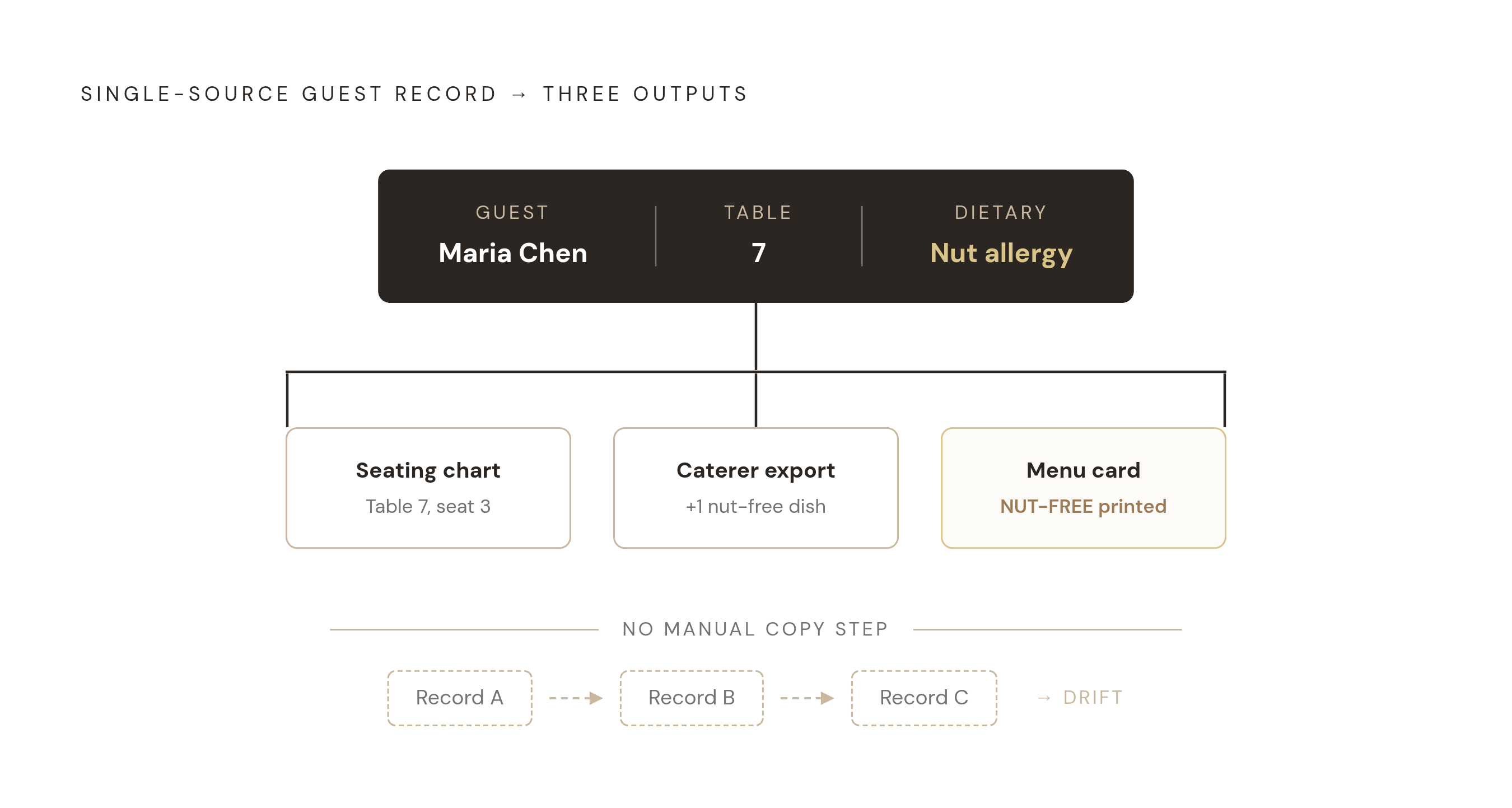
Collection alone does not make the process safe. If those answers then need to be copied into a seating chart and catering list, the couple still has to reconcile separate records during the busiest part of planning. A completed RSVP can create false reassurance when the dietary note has not reached the people preparing or serving the meal. The gap lies between recording the answer and using it.
Most Australian caterers and venue coordinators need the finalised seating plan well before the event. So dietary notes need to be linked to where each guest will sit before that deadline. The caterer needs numbers per dish, while the venue needs names per table. Those are different views of the same guest information and should share a single version of it.
A menu card at each place setting that clearly labels each dish depends on that connection. The dietary note needs to remain attached to the guest record as the plan develops. Otherwise, someone has to copy each seating change by hand. A connected system keeps the table plan and kitchen list in agreement by letting them draw from the same data.
Which wedding website builder is actually built for Australian couples?
For Australian couples comparing tools in 2026, the useful distinction is between local support built into the product and adjustments the couple must make themselves. Different parts of the system have to handle Australian vendor categories, legal milestones, flora knowledge and the way venues work. A tool can handle one well without handling all of them.
The comparison also needs to separate presentation from planning. A website may tell guests how to get there and make it easy to RSVP but still leave the couple to move replies elsewhere. Even a detailed planning tool needs a site that guests can use easily.
Budgeting and RSVP depth provide more concrete distinctions. An estimate-based calculator does a different job from a tool that records actual invoices. A basic attendance response does not establish support for multi-event RSVPs. Having a seating planner does not show that dietary information gets to the caterer either.
There is not enough product-specific evidence here to name a best builder or produce a defensible ranked shortlist. A confident ranking would hide that limit. The comparison should use what tools have been shown to do, with separate checks for Australian support and for how well the data is connected. Any claim to be purpose-built should survive both tests, rather than relying on a local price tag to stand in for the rest.
What to look for when choosing a tool — and why the connected-data question is the right one to ask
The most useful buying question is whether information entered once automatically appears everywhere it is needed. That is more revealing than asking whether a tool has a seating chart. A beautiful website whose RSVPs land in a separate system recreates the spreadsheet work the couple wanted to avoid. Manual movement is where omissions and mismatched records enter the process.
The practical test is simple enough to try. Enter a dietary requirement during the RSVP step, then check whether it appears automatically in the seating chart and the caterer’s export. If a manual transfer is required, the records can drift. This test examines a real planning dependency rather than accepting a list of features as proof that they work together.
Actual invoices should supplement estimates to inform spending, with space for costs such as corkage, cake-cutting and gratuities. The NOIM deadline and Australian seasonal sequencing should appear without the couple having to know what is missing. Otherwise, using the tool correctly requires the local knowledge it is supposed to provide.
A tool that is free to start using and clear about how to upgrade lets couples work out what they need before they pay for a subscription. The final choice should turn on what the tool removes from their workload. A wattle arch is a useful opening test of local understanding, but the stronger test is whether that understanding reaches the calendar, the vendor brief and the kitchen.