Wedding Day Run of Show Template for Coordinators
Anchor your day to four fixed points, then build everything backward and forward from there.

A wedding day runsheet stops working the moment it becomes a list of moments instead of a set of load-bearing points. The fix starts with anchors: ceremony start, reception entry, sunset, and the venue's bump-in and bump-out rules. Everything else on the day gets built backward or forward from those four points.
Australians call this document a runsheet. Americans call the same thing a timeline. The name changes, the structural logic does not: both are a minute-by-minute schedule of the day, with moments, times, and the people responsible for each one. Both names carry the same discipline, so from here, this piece uses "runsheet" throughout.
Ceremony start is the spine. Hair, makeup, florals, and photography all count backward from it. Reception entry, whether that's a cocktail hour start or a direct move into the reception room, is what caterers, musicians, and the MC need locked in early, because their own prep counts backward from that second anchor. Sunset is fixed by the calendar, not by preference. It cannot be moved to suit a running-late ceremony, so the portrait window has to be protected around it rather than squeezed after the fact. Venue bump-in and bump-out rules, meanwhile, are contractual: access times, sound curfews, and hard stops that get set months before the wedding and don't flex on the day.
Without anchoring, the same three failures recur across coordinator experience. A ceremony overrun by ten or fifteen minutes compresses everything after it, because nothing downstream had a buffer built in. And the venue curfew gets breached because nobody built the back half of the day by counting backward from the hard stop. Each of these is preventable. Each starts with the same missing step: no anchor, no structure.
The minimum information every runsheet entry must carry
Before building out any phase of the day, the document itself needs a consistent structure. Every entry in a working runsheet carries the same seven fields, and a document missing even one of them creates ambiguity that a coordinator has to resolve live, on the day, with no time to spare.
Those seven fields form the backbone of every phase covered in this piece, and they work well as a literal column header row in a spreadsheet or table view:
- Time: an exact start, not a window or a range
- Segment: the name of the moment itself
- Duration: how many minutes it runs
- Location: which space it happens in, since guests and vendors move between the ceremony hall, cocktail area, and reception room throughout the day
- Owner: the person who cues or executes the moment
- Vendor action: what the photographer, DJ, catering lead, or videographer does at that specific cue
- Notes and contingency: buffer time, backup plan, or the exact wording of a cue
A runsheet that carries all seven fields for every entry gives a coordinator a document that answers questions before they get asked. One missing field, on the other hand, is a gap that someone has to fill in real time, usually under pressure, usually at the exact moment least suited to improvising.
Phase 1: Pre-ceremony prep (counting backward from the ceremony anchor)
Pre-ceremony prep is where the ceremony start anchor does its first real work. Every call time in this phase gets derived by counting backward through a chain of dependencies, not by guessing at a buffer that feels comfortable. The coordinator's job here is to surface those dependencies: the hair artist arrives at 8:00am and the reception room doors open at 6:15pm.
A practical 25-moment Saturday runsheet from Managing Matrimony, for a 4:00pm ceremony start, shows Phase 1 running from 7:00am through 3:30pm. Hair artist arrival is set for 8:00am, makeup begins at 8:30am, the florist delivers bouquets at 10:00am, the photographer arrives at the bridal suite at 12:30pm, and the bride dresses with final details at 2:30pm. Notice the gaps between those times aren't even. Hair and makeup for a full bridal party can run four to six hours, and the florist needs access before photography begins. The florist has to deliver before photography starts, since bouquet detail shots are a standard part of the coverage a photographer needs time to capture.
First: which moments have a fixed minimum duration that can't be compressed, no matter how tight the morning gets? Hair and makeup for a full bridal party sits in that category. Second: which moments depend on another vendor finishing first? The photographer can't start documenting the suite before it's set up, and the florist has to be finished before the bride dresses. Each moment gets slotted at the latest possible start time it can afford, and only gets pulled earlier if there's genuine capacity to spare.
Ownership in this phase typically splits between the bridal party coordinator and the venue coordinator. That split needs to be settled well before the morning. A cue that's unclear on paper becomes a real problem when the person meant to hold it doesn't know it's theirs.
Phase 2: Ceremony (the anchor itself, and the cues that bracket it)
The ceremony is the one phase where a coordinator has the least room to step in once things are moving. Every cue attached to it needs to be assigned, confirmed, and rehearsed before the day starts. There's no fixing a missed cue mid-ceremony the way there might be during prep or cocktail hour.
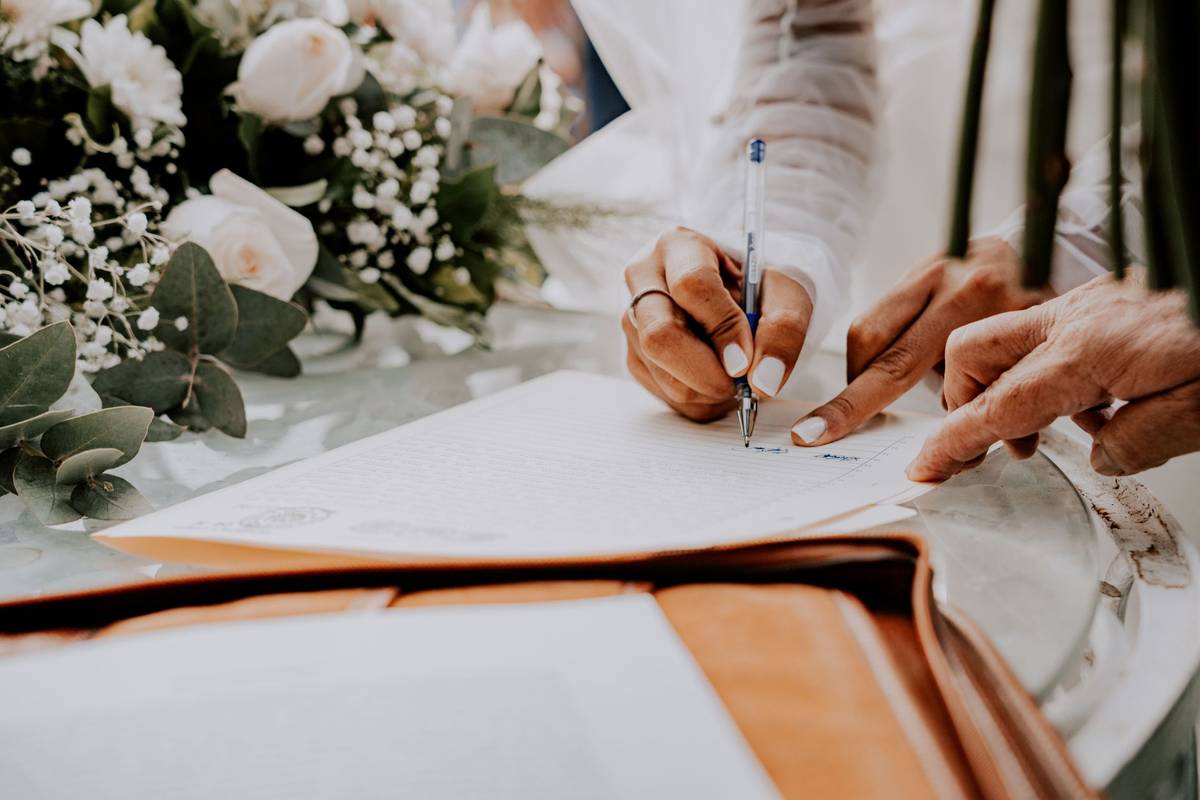
For a 4:00pm ceremony start, the confirmed structure runs: music and guest seating at 3:45pm, processional at 4:00pm, and signing and recessional at 4:40pm. Inside that block, ownership is split cleanly by role. The celebrant owns the ceremony floor entirely, and the coordinator steps back once the processional begins. The DJ or musician holds the music cues, but the processional track doesn't start on a fixed clock time. It starts on a physical signal from the coordinator, because a bridal party walks down the aisle at its own pace, not against a stopwatch. That's a small distinction with a real operational consequence: build the runsheet around a signal cue here, not a time stamp, or the music and the walk will drift apart from the very first step. The photographer and videographer hold their own positions throughout, but they still need the estimated ceremony duration in advance so they can manage battery life and card capacity without missing a moment mid-swap.
The most common cause of ceremony overrun is unplanned pauses, a microphone cutting out, seating congestion that delays the start, or readings and vows that run longer in the moment than they did in rehearsal. None of those are avoidable outright, but their effect is manageable if the notes and contingency column carries a buffer, and if that buffer is flagged not just internally but to the MC and the reception venue directly. A florist delivery is set for 10:00 am.
Phase 3: Cocktail hour and venue changeover (managing the gap between anchors)
Cocktail hour looks like a pause in the schedule from the outside. Operationally, it's the busiest stretch of the day for a coordinator, because it's the one phase running three separate streams in parallel: photography, the catering reset, and guest management, often across two or three different spaces at once.
For a 4:00pm ceremony, the confirmed sequence has guests transferring to the reception area with canapés beginning at 5:00pm, and the reception room doors opening at 6:15pm. Guest flow from the ceremony space into the cocktail area needs a named owner, usually a staff member or usher, so guests aren't left standing without direction while the room behind them resets. Family formal portraits run on the photographer's lead, with the coordinator assembling groups from a shot list prepared well in advance, since chasing down relatives one at a time burns minutes the schedule doesn't have. Couple portraits need to wrap by or at the sunset anchor if golden-hour shots are part of the plan, because that light window doesn't wait. Meanwhile, the reception room itself needs a final check from the catering lead, confirming table settings, dietary place cards, and AV, before doors can open on schedule. The bridal party, separately, needs staging for their entry, held by the coordinator until the MC signals readiness.
The location field in the runsheet matters most in this phase. With guests, photography, and catering staff moving through three different spaces simultaneously, a runsheet that doesn't specify where each moment happens leaves the coordinator guessing which stream to check on first. If the venue's natural golden-hour light falls inside this window, the couple's portrait segment needs to be blocked out and protected on the runsheet like any other fixed commitment, and guests should be briefed ahead of time so a missing couple reads as planned rather than as a delay.
Phase 4: Reception (sequencing speeches, meals, and entertainment between service anchors)
Inside the reception, meals function as the real structural anchors of the phase, more than any single scheduled moment, because kitchen service timing is the least flexible element on the floor.
For a 4:00pm ceremony, the confirmed sequence from Pro DJs Australia runs bridal party entrances at 6:30 pm, the couple's entrance at 6:40 pm, welcome at 6:45 pm, entrée served at 6:50 pm, speeches part one at 7:00 pm, and main course at 7:30 pm. The sequencing logic behind those times solves three mistakes that appear constantly in reception planning. Speeches scheduled over a course split guest attention between eating and listening, so they belong between courses, timed to follow entrée or precede main, never layered on top of active service. The first dance is delayed when the DJ isn't cued, so the owner column needs to assign that handoff explicitly. And the cake cut drifts into whenever feels convenient unless it's given a hard time and a named owner on the runsheet, rather than an open-ended "when we get to it."
The venue curfew anchor shapes everything at the back end of this phase. The last dance, the final round of service, and guest exit all get built by counting backward from that curfew, and any late addition, an extra speech, a surprise performance, has to displace something already on the schedule rather than simply pushing the curfew later, since the curfew itself doesn't move. The DJ or band needs that hard-stop time confirmed in writing well before the day, noted directly in their section of the runsheet.
Phase 5: Bump-out (ending cleanly before the venue's hard stop)
Bump-out is the phase most often left unplanned on a runsheet, and skipping it is most likely to generate venue penalties or vendor overtime charges. Treating it as a managed phase, rather than a wind-down that sorts itself out, closes the loop on everything the earlier anchors set up.
Before the day itself, bump-out needs three things confirmed. The venue's access window for removing decorations, hired equipment, and catering items has to be pulled from the contract and entered onto the runsheet as a hard deadline. Each bump-out stream needs its own named owner: florals, AV and lighting hire, catering equipment, and personal items like gifts, cake, and stationery all need someone specifically responsible for them. And if the couple's transport is booked for a set pickup time, final farewells need to fit inside that window rather than run past it.
One detail catches coordinators repeatedly: hired items like furniture or tableware often carry their own return windows that don't match the venue's general bump-out time. The notes column needs to carry each hire company's specific latest pickup or return time, separate from the venue's own deadline. The vendor section for this phase goes to the catering lead, the AV technician, and any hire companies directly involved, not to the couple, who have their own farewell and departure to manage.
Distributing the runsheet so every vendor holds only their part
A finished runsheet is only half the job. Distribution shapes whether the runsheet actually works on the day, and sending the full document to every vendor creates its own kind of noise: suppliers spend time scanning for the moments that involve them, buried among dozens of rows that don't.
The better model keeps the master runsheet with the coordinator alone, as the single source of truth from which every other version gets extracted. Each vendor receives only the rows where their name appears in the Owner or Vendor Action column, along with the two rows immediately before and after each of their own cues for context. Every vendor's version, regardless of how short it is, should still carry the four fixed anchors: ceremony start, reception entry, sunset, and the hard curfew, so each supplier can orient themselves inside the day even without seeing the full sequence.
For format, a PDF sent by email well ahead of the day gives vendors something to print and annotate by hand. A shared live document works well for coordinator-to-coordinator updates in the lead-up, but should switch to read-only for vendors once the final version is locked in, so nobody is working from a version that quietly changed underneath them. On the day itself, the coordinator holds the full printed master, and each vendor holds only their printed extract. A short reply-by date attached to the distribution email, asking each vendor to confirm receipt, closes the loop and prevents a supplier from showing up unaware that a timing shifted after the version they last saw.
Where couples can
Couples don't need to build this document from scratch to benefit from how it works. Understanding the anchor logic, ceremony start, reception entry, sunset, and venue curfew, gives couples a clear way to evaluate whether a coordinator or venue coordinator is actually running a structured day or improvising one in real time. Asking to see the four anchors locked in early, and asking who owns each major handoff, are reasonable questions for any couple to raise well before the wedding itself.
Couples can also help the process by supplying accurate inputs early: realistic hair and makeup timing for the full bridal party, confirmed vendor arrival windows, and an honest sense of how many family formal groupings the photographer will need to work through during cocktail hour. None of that requires spreadsheet expertise. It requires knowing that the schedule is only as good as the anchors and the ownership behind it, and that a runsheet built this way is what keeps a wedding day running on its own timeline rather than catching up to one that's already slipped.
Sources
- The Ultimate Wedding Day Runsheet Template for Australian Couples — Managing Matrimony
- Wedding Run of Show: Template + Timeline Guide
- Wedding Run Sheet: A Guide to a Flawless Day
- Run of Show — Templates, Examples & Complete Guide
- How to Create the Perfect Wedding Day Run Sheet (Free Template + Example Timeline)
- Run-of-Show Template to Coordinate Every Event Detail [2026] • Asana
- What does a typical wedding day run sheet look like?