Seating Chart Etiquette for Divorced and Blended Families
How to seat divorced parents without creating family drama.
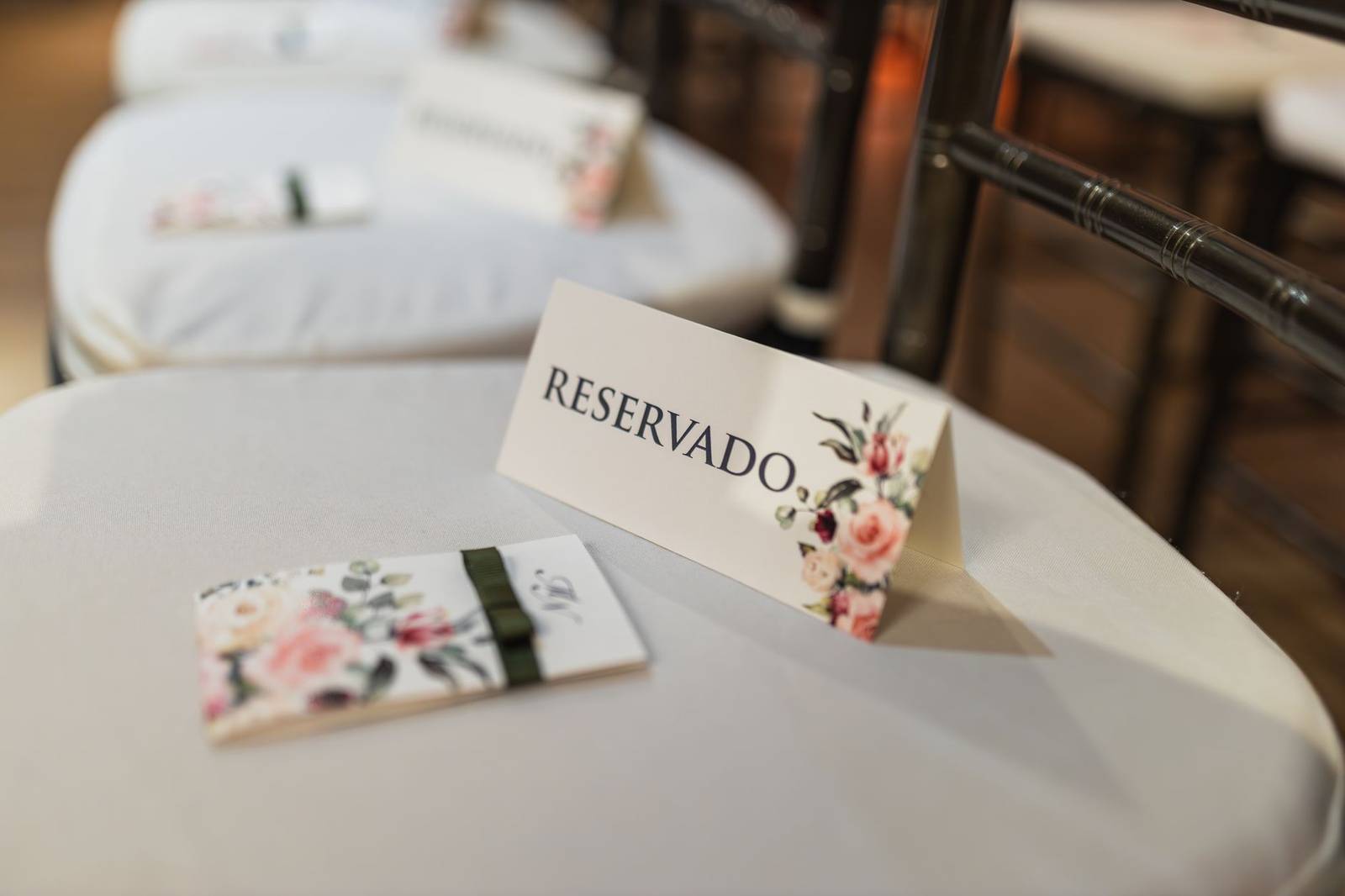
Most wedding seating guides are built for a shape that a lot of modern families no longer have: two sets of parents, one parents' table, maybe a second if the families run large. That template assumes a world of intact nuclear families on both sides. A blended-family wedding can easily involve two, three, or four separate parent units: the bride's mum and her husband, the bride's dad and his new wife, the groom's mum and her partner, the groom's dad and whoever he's currently with. The two-table template doesn't bend to fit that; it breaks.
The family isn't broken here. The family is simply bigger and more layered than the standard chart was ever designed to hold. A seating mistake in this context doesn't stay quiet, either. New partners, stepsiblings who grew up under the same roof, half-siblings who only ever saw each other at holidays: each group needs its own placement logic, not a quick exception tacked onto the usual rules.
The one governing principle: separate but equal, applied before anything else is decided
Every seating decision involving divorced or blended families comes back to one rule: each parent has to feel equally honoured. Same table quality, same distance from the couple, same visual prominence in the room. The couple cannot sit down with each parent and explain, in the moment, that nobody was favoured. The room has to say it for them, and it does that through placement.
Equal distance from the head table matters regardless of which side of the room a parent ends up on. Each parent should sit surrounded by people who are genuinely theirs, friends and family who provide comfortable company without forced mingling. Picture the venue as having a centre line running from the entrance to the head table. Parent tables mirror each other across that line: same row, same distance, same prominence. That visual symmetry does the diplomatic work no conversation can.
Even where the couple is closer to one parent than the other, that closeness has no place in the chart. Extra warmth toward one parent belongs in a private gesture, a toast, a quiet word, a gift, not in where people sit. Once the couple accepts that neither parent can be seen as getting the lesser table, every other hard call in this article becomes a matter of applying that rule to the specifics in front of them.
Reading the room before drawing the chart: assessing the divorce dynamic honestly
Separate but equal looks different depending on how the parents actually get along, and the couple needs an honest read on that before any chart gets drawn. Four rough levels cover most situations.
A friendly divorce is one where the parents attend events together and new partners are welcomed without friction. The simplest approach is to ask the parents directly what they'd prefer.
A civil divorce means the parents can exchange pleasantries but wouldn't choose to spend an evening together. Here, separate tables in the same general area make sense, with a buffer of neutral guests between them and no direct sightline if the room allows for it.
A tense divorce involves active resentment, often tied to custody disputes, infidelity, or money.
A no-contact divorce means the parents don't speak at all, sometimes under legal restriction.
The job here is to plan for the relationship the parents actually have, not the one the couple wishes existed. The paths to the restroom and the bar also matter. Each parent should be able to move through the room without an unplanned encounter.
The sweetheart table as the structural solution to the head-table problem
The single most contentious question in divorced-family seating is usually which parent sits at the head table. A sweetheart table, just two seats facing the room, removes that question. Neither parent sits up front. Both get their own VIP family table, positioned with equal weight on either side of the couple.
A sweetheart table tends to be kinder than a traditional head table whenever divorced parents are involved, since a shared top table can force an ex-couple into the same photograph or the same stretch of conversation all night. Locking in the head table format early matters, since it drives the layout of the entire room. Changing it late means redrawing the whole chart.
Seating divorced parents: the two-table layout in practice
Once the head table format is settled, the two-table layout for divorced parents follows a fairly simple spatial logic. Picture the room split by a centre axis running from the entrance to the couple's table. Dad's table sits to the right, same row, same distance, surrounded by his side of the family and his closest friends.
Four parent units means four VIP tables to balance instead of two, but the mirroring principle doesn't change.
Buffer zones matter from Level 2 up: at least one table of neutral guests, cousins or friends, sitting between the two parent tables. At Level 3, a physical feature of the room, the dance floor, a pillar, a step in elevation, can serve as a natural divider. For tense situations, it's worth checking that the two parent tables don't have a direct line of sight to each other.
New partners sit with the parent they're with, never beside an ex-spouse under any circumstance. A partner who's only been around for six months still sits with that parent, but doesn't automatically get placed in the innermost ring of honour. For Level 3 and Level 4 situations, assigning a point person, a trusted friend briefed ahead of time, to each parent gives the couple a way to manage tension without having to manage it themselves on the day.
Blended families: scaling up to the constellation pattern
Two parent tables work fine for a single divorce. Three or four parent units, which is common once both sides of the family have remarried, call for a different shape entirely: the constellation pattern.
Picture the couple at the centre, whether at a head table or a sweetheart table, with an inner ring of tables surrounding them, one table per parent unit, each placed at an equal radius from the centre. Equal distance reads as equal weight, no matter how many units are involved. Two units produce the standard divorced-parents layout already described. Three or four units produce the full constellation. Either way, the structure stays recognisable and symmetrical.
A four-unit family brings its own space requirements. With four or more units in the mix, it helps to tag every guest by which parent unit they came in with and which branch of the family they connect through. That tagging keeps the room balanced as the chart fills out.
Round tables are better than long banquet tables wherever possible in these layouts. A round table lets people see across to each other, which matters because many guests at the table will be meeting for the first time. A long banquet table hides the far end and quietly discourages anyone from talking across it.
Where step-parents sit: honouring the relationship, not the title
The chart should reflect who a step-parent actually is to the couple, not what a family tree says on paper. A step-parent who was there from childhood, who showed up at school events, paid for braces, drove to school plays, sits right next to their spouse at the VIP parent-unit table. That person has earned the same honour as a biological parent, and if the couple is comfortable with it, can be included in the parent dances without a second thought.
A step-parent who came into the picture later, during the couple's teens or adulthood, and built a cordial but lighter relationship, still sits with that parent at the parent-unit table. That seat just doesn't need to sit in the innermost ring of honour by default. If a step-parent did the real raising, present before the couple turned ten, that step-parent sits at their partner's parent-unit table rather than at some separate step-parents table off to the side. The chart should match who actually raised the couple, not a label.
Regardless of how amicable a divorce looks on the surface, a new partner never sits next to an ex-spouse. The test for any step-parent placement comes down to one question: what relationship does this person actually have with the couple? That answer decides the seat.
Where Siblings and Step-Siblings Sit
Putting siblings at their parent's table forces a quiet loyalty choice on people who shouldn't have to make one. A dedicated sibling table solves this cleanly, and it includes step-siblings and half-siblings right alongside biological siblings.
Placed in the middle ring, adjacent to the parent-unit tables, a sibling table gives stepsiblings and half-siblings the same visual standing as biological siblings. In almost every blended-family case, that's the right call. It groups every sibling together regardless of which parent they connect through, and it quietly affirms, without a speech or a toast, that the family is one family for the night.
Before locking in a sibling table, confirm that everyone assigned to it actually gets along. A unity gesture that seats two stepsiblings who genuinely can't stand each other creates a worse outcome than two separate, carefully chosen tables would have. If the siblings are adults with partners of their own, the table can split into sibling-and-partner pairs one ring further out. It's a less elegant solution, but sometimes necessary if the single table would otherwise run too large or feel too divided. Any sibling who's part of the wedding party sits with the wedding party at the head or party table. They shouldn't be made to choose between that placement and sitting with their parent's side.
The conversation to have with each parent before the chart is finalised
One short, private conversation with each parent, held early and separately, reveals the specific person a parent needs not to sit near, something no seating formula can predict on its own. A simple version of the question works well: "I want you comfortable. Does that work, or is there someone you'd rather not be near?" That gives each parent a voice without turning the chart into a negotiation.
This conversation has to happen one-on-one, kept private, never relayed back to the other parent and never run through a group chat where parents can negotiate with each other through the couple. The goal is honest information, not a managed summit between two people who may not want one.
The first draft of the chart should come together with just the couple, before any parent sees it and before the wider family weighs in. Too much input too early sends the whole process in circles. The conversation itself should stay short and lead with the positive: where the parent will sit and who they'll be with. Parents give input. The couple makes the final call.
Displaying the final chart so guests find their seats without drama
How the chart gets displayed on the day matters almost as much as how it was built. A single board or mirror listing guests in alphabetical order by name, with the table number beside each one, keeps the moment of finding a seat simple and private. Grouping names by table number instead creates a crowd of guests all scanning the wrong cluster for their own name, and it broadcasts to the room which tables look more prominent than others. Alphabetical order avoids both problems at once.
Escort cards, one per guest rather than one per couple or household, serve the same purpose at the board and double as a place to note dietary requirements discreetly, since the card can carry both the table number and a small dietary marker. For blended families with several parent units, a clear and dignified display matters even more. It's often the first physical confirmation each family member gets that they have a place in the room.
Whatever tracker the couple uses to build the chart should list dietary restrictions next to every guest's name. The caterer needs to know exactly which plate goes to which seat, and any guest with a severe allergy should be identified by name on that list, not folded into a general headcount.
Putting the whole framework to work: building the chart from scratch
Everything above reduces to a build sequence the couple can follow directly.
Start by mapping the parent units on paper, each biological parent paired with their current partner, before opening any seating tool. Counting the units, two, three, or four, decides whether the layout is the simple two-table pattern or the full constellation.
Choose the head table format next. A sweetheart table suits any divorce dynamic at Level 2 or above. A family-style table is reserved for Level 1 situations where everyone involved is genuinely comfortable sharing one long table.
Place the parent-unit tables at equal radius from the couple's table, mirrored across the centre axis, matched in row, distance, and table quality, with buffer zones scaled to whatever tension level applies.
Place the sibling table in the middle ring next, one table for all siblings and stepsiblings together, adjacent to the parent-unit ring, after confirming that the group actually gets along.
Place grandparents and any guest with mobility, hearing, or care needs after that. Honour, at this stage, means access: a short walk, a clear path to the restroom, distance from the speakers.
Fill the remaining tables outward through extended family, friends, and colleagues, mixing people who'll actually have something to talk about rather than scattering names for the sake of appearing even-handed.
Run a sightline and movement check before calling the chart finished: can each parent reach the restroom, the bar, and the dance floor without crossing paths unexpectedly? Adjust the layout if not.
Hold the private conversations with each parent, make whatever small adjustments come out of them, and lock the chart.
Finally, export the dietary information to the caterer with guest names attached to each allergy, and confirm the display board lists every guest alphabetically by name.